
The GST, an indirect tax regime, is to be rolled out from April 2016.

Asking the state finance ministers to resolve the pending issues expeditiously, the Centre on Thursday said introducing Goods and Services Tax was critical for economic reforms.
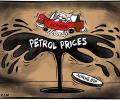
Many states are open to the idea of petrol and diesel being brought under the goods and services tax (GST) regime - contrary to the perception that they are averse to it - but they want a concrete proposal, including a compensation mechanism, from the Centre. West Bengal Finance Minister Amit Mitra says while the issue can be discussed, the Centre may not be keen to bring the change because it earns "much more" from taxes on petrol and diesel. "(The peak rate of) GST is 28 per cent. Under the regime, the Centre would only get 14 per cent. "So, definitely, the Union government does not want GST on fuel. It is all lies. Currently, they are in a very cozy place," Mitra said.
Arun Jaitley on Friday said he would defer the move.

The 47th GST Council meeting that is currently underway is slated to discuss a host of issues, including a mechanism for compensating states for revenue loss, tax rate tweaks in some items and relaxed registration norms for small online suppliers. Further, the meeting of the Council, chaired by the Union Finance Minister Nirmala Sitharaman and comprising state counterparts, will also clear levying the highest tax of 28 per cent on online games, casinos and horse racing, besides, measures to curb tax evasion, especially devising ways to tackle high-risk taxpayers in GST. "The meeting is being chaired by Hon'ble Union Minister of Finance @nsitharaman and many important decisions are expected to be taken at the meet," PIB Chandigarh tweeted.
The Centre managed to collect only Rs 990 crore as compensation cess in April 2020-21, almost one-ninth of the figure of Rs 8,874 crore mopped up a year ago. The subdued collection would further increase states' problems unless the GST Council, which meets next week, decides to borrow from the market.

Facing a deepening slowdown, the auto sector is pinning hopes on the GST Council meeting on September 20 for a rate cut from 28 per cent to 18 per cent. However, states including Bihar, West Bengal, Kerala, and Punjab are of the view that the slowdown in the auto sector is not because of the GST rate but structural issues in the economy.
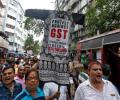
After 17 tumultuous years, a nationwide Goods and Services Tax (GST) will rollout from midnight of June 30, overhauling India's convoluted indirect taxation system and unifying the $2 trillion economy with 1.3 billion people into a single market.

The passage of the bill will pave the way for setting up of a GST council that will decide the tax rate, cess and surcharges.

The panel of state finance ministers is likely to recommend a uniform GST levy of 28 per cent on online gaming irrespective of whether it is a game of skill or game of chance, sources said. However, it is likely to suggest a revised formula for calculating the amount on which the Goods and Services Tax (GST) would be levied. Currently, online gaming attracts 18 per cent GST.
The decision to impose a 28 per cent tax on the full face value of bets placed on online games will be implemented from October 1 even though there was demand for a review from states like Delhi and Goa, finance minister Nirmala Sitharaman said on Wednesday. The GST Council -- the highest decision making body of the new indirect tax regime that comprises Union finance minister and representatives of all states -- discussed the language of amendments that will be needed to enabling taxing online gaming, she said after the panel meeting.
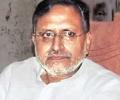
Sushil Kumar Modi tells Business Standard the spirit of collective federalism needs to be heeded by all sides if the key reform is to become a reality.
Finance Minister Pranab Mukherjee said 'yes' in a written reply to the Rajya Sabha when asked whether the chairman of the Empowered Committee of the State Finance Minister has expressed the opinion that it was not feasibile to implement GST from April 1, 2010.

While Congress and the states ruled by non-NDA parties pushed for the Centre meeting its statutory obligation of covering the deficit, the Union government cited a legal opinion to say it had no such obligation if there was a shortfall in tax collections. The Centre as well as BJP-JD-U-ruled Bihar were of the opinion that the states should borrow to make up for the shortfall in the tax revenues that have been compounded by the COVID-19 crisis, sources said.

"There will be some challenges" in the switchover to GST in the short term, Finance Minister Arun Jaitley has warned.
The GST Council in its next meeting may look at raising the lowest tax slab to 8 per cent, from 5 per cent, and prune the exemption list in the Goods and Services Tax regime as it looks to increase revenues and do away with states' dependence on Centre for compensation, sources said on Sunday. A panel of state finance ministers is likely to submit its report by this month end to the Council suggesting various steps to raise revenue, including hiking the lowest slab and rationalising the slab. Currently, GST is a four-tier structure attracting a tax rate of 5, 12, 18 and 28 per cent.
The empowered committee of state finance ministers has virtually trashed the Thirteenth Finance Commission taskforce's Goods and Services Tax report.

Several opposition ruled states expressed concern over Centre's decision to allow enforcement directorate (ED) to share information with GST Network, with finance minister of AAP-ruled Punjab Harpal Singh Cheema on Tuesday saying it amounts to 'tax terrorism' and scaring small business. The finance ministry, through a notification, brought in an amendment to the provisions of Prevention of Money Laundering Act (PMLA), 2002, as per which GSTN, which handles the technology backbone of Goods and Services Tax, has been included in the list of entities with which ED will share information. At the 50th GST Council meeting on Tuesday, Aam-Aadmi Party ruled Delhi and Punjab voiced concerns over the notification and demanded a discussion.
The Union Cabinet on Wednesday approved changes to GST laws to levy a 28 per cent tax on the full face value of bets in online gaming, casinos and horse race clubs, sources said. The amendments to the Central GST (CGST) and Integrated GST (IGST) acts, which were approved by the GST Council last week, are likely to be introduced in the ongoing monsoon session of Parliament, which will end on August 11. The GST Council in its 51st meeting on August 2 recommended amendments to the Schedule III of the CGST Act, 2017, to provide clarity on the taxation of supplies in casinos, horse racing and online gaming.

'Spend, but create assets, spend but make sure that people benefit from it.' 'This has been a beautiful guiding principle. And I think as a finance minister I owe so much to the prime minister for keeping this path clear before us.'
The states have unanimously pitched for sole administrative powers to carry out assessment, scrutiny and enforcement for entities up to an annual turnover of Rs 1.5 crore.

According to Mitra, items such as foodgrain, vegetables, leather goods, footwear, cottage cheese, puffed and flattened rice, books and entertainment tax, among several others, should be in the zero-tax bracket.
It appears that things will crystallise on several aspects of the GST only by end 2008. This means that the country will only have a period of 15 months, from beginning 2009 to March 2010, to ensure that all the constitutional policy and legislative changes take place. It does seem increasingly a big challenge, says S Madhavan.

GST reform has been hanging fire since 2006-07.

Among Sensex firms, Bajaj Finserv, ICICI Bank, Reliance Industries, Bajaj Finance, Larsen & Toubro and Bharat Electronics were the major gainers. However, Power Grid, Eternal, Hindustan Unilever and Adani Ports were among the laggards.

The Rajya Sabha on Wednesday approved the biggest tax reform since Independence.

Sri Annapoorna Hotel on Saturday appealed to the people to put to rest unnecessary assumptions and political misunderstanding after a video of its owner apologising to Union Finance Minister Nirmala Sitharaman over his remarks on Goods and Services Tax (GST) went viral on September 13.

The old India was economically fragmented. New India will create one tax, one market, one nation, said Jaitley.

Negotiations near deadlock, as states oppose Constitution Amendment Bill.

The Centre on Thursday placed before the GST Council two options for borrowing by states to meet the shortfall in GST revenues, pegged at Rs 2.35 lakh crore in the current fiscal.
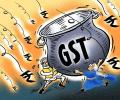
The Centre is looking to convene a meeting of the all-powerful Goods and Service Tax Council in early January. The meeting is likely to focus on rectifying the inverted duty structure for a few more items and will also serve as a platform for pre-Budget discussions between Union Finance Minister Nirmala Sitharaman and state finance ministers, Business Standard has learnt. "The current Winter Session of Parliament ends on December 23, followed by the Christmas-New Year period. "After that we would like to have a meeting of the GST Council, depending on whether there can be a quorum," a top government official said.

We should work in unison to boost growth: FM
By doing away with the 1 per cent inter-state tax over and above the GST rate, the government has met one of the three key demands over which Opposition Congress has been blocking the Bill in the Upper House

The GST Council also decided that a committee of officers will be constituted to examine the simplification of forms for annual return and reconciliation statement.
The GST Council on Saturday clarified that guarantees provided by corporate to their subsidiaries will attract an 18 per cent GST, while no tax will be levied if a personal guarantee is given by a director to the company. The council, chaired by Union Finance Minister Nirmala Sitharaman and comprising state ministers, also cut the GST rate on molasses to 5 per cent from 28 per cent. It also ceded the right to tax Extra Neutral Alcohol (raw product for making alcohol for human consumption) to the states.

Finance Minister Pranab Mukherjee had asked officials in his ministry to finalise the draft by August 20 so that it could be in Parliament before the session concluded on August 27, said a finance ministry official.

The Centre on Tuesday permitted 20 states to raise Rs 68,825 crore through open market borrowings to bridge the GST revenue shortfall.

Here's everything you need to know about the Goods and Services Tax Bill.

The finance Minister's comments came on a day when states finance ministers deliberated on various aspects of GST structure at a meeting in New Delhi.
A memorandum, signed by the chief ministers or finance ministers of Andhra Pradesh, Puducherry, Karnataka, Delhi, West Bengal, Kerala and Punjab, said the terms were disruptive and a cause for concern.
